


As Head of Product at Eureka Solutions, Mike Hall has spent the last eight years growing the Besyncly platform into something special.
Originally created as an Addon to offer integrations to Sage users, Besyncly now offers 40+ system connectors, supports millions of transactions and over £1bn in order value every year.
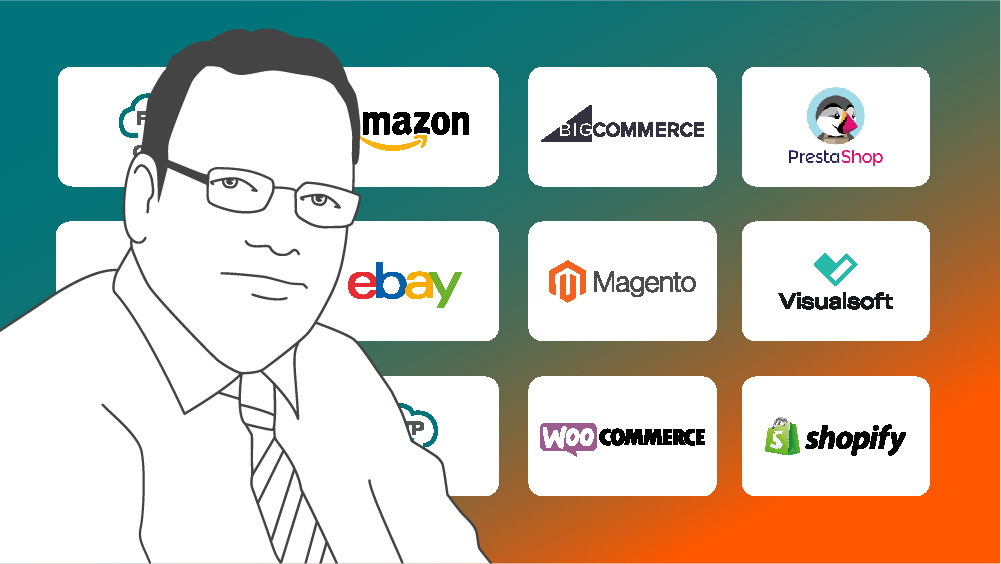
Now focusing on taking Besyncly to the next level and supporting even more businesses across the globe, Mike is sharing an exclusive insight into the inner workings of a modern integration solution.
Join us as we quiz him on everything from his past software experiences to the future of Besyncly and what’s to come…
Q: Can you tell us a bit about your background and how you ended up in the role of Head of Product at Eureka Solutions?
A: My career really began at Sage, where I spent 19 years as a domain expert in Accounting, Financial Forecasting and Project Accounting. I managed projects on a range of Accounting Solutions including Sage 50 and Sage 200.
I then spent some time over the next 5 years working at various software companies, guiding projects and leading on product development strategies.
In 2014 I used my accumulated experience to begin a new role as Senior Project Manager at Eureka Solutions, and in 2017 I led on the launch of our integration software Besyncly, which was originally developed for Sage users.
The product has come a long, long way since its launch in 2017, and I’ve thoroughly enjoyed working with our teams to build and expand this product over the last eight years.
Q: What is your typical day like as Head of Product, and how do you prioritise tasks and responsibilities?
A: As I mentioned, our teams are always working hard to expand the capabilities of Besyncly. As a result, we have a busy schedule of new connector development, platform enhancements, project scoping and delivery, sales, marketing and strategic product roadmap discussions.
Balancing tasks and priorities is certainly a challenge, but with such a committed and experienced team working behind the scenes at Besyncly, we deliver excellent results in all of these areas.
Q: What is the core mission or vision behind your integration software, and how does it differentiate itself in a crowded market?
A: The key things that really set Besyncly apart from the competition are flexibility and customisation.
With other integrations solutions, customers are expected to “plug and play”, meaning that they take an out-of-the-box connector, and are expected to muddle through the implementation process alone and work around rigid capabilities and limitations.
With Besyncly, our experts guide our customers through every step of the process, complete the entire integration set up to the exact requirements of the user, and offer ongoing support as standard. It’s the human elements of excellent customer service and outstanding technical expertise that really set us apart.
Q: Can you talk us through your process for setting the roadmap for product development? How do you balance innovation and customer feedback?
A: Certainly! Our roadmap is carefully laid out and we seek input from a range of sources.
Customer input is the primary and most important source of roadmap intel for us. We take guidance from our customers and partners on what they want to see from us, and work hard to deliver on this.
The second source of roadmap intel is market research. I work closely with our marketing team to research highly sought-after integrations, using this data to inform our roadmap and unlock new markets.
Finally, due to our team’s wealth of experience in the software industry, we are able to keep one ear to the ground at all times and anticipate new platform releases to inform development.
Q: What trends do you see emerging in the integration software space? How is your product adapting to these trends?
A: That’s a great question! Major changes are taking place in the ecommerce world at the moment. I covered these in detail in a recent blog post, but there are some really exciting changes taking place with the lines between physical and virtual commerce becoming blurred, which increases the need for integration.
Something we’re seeing in the accounting integrations space is the strong emergence of iplicit users over the last 2 years. Demand for iplicit integrations is growing exponentially, and we’ve been fortunate to work on many of these projects.
Q: What challenges do you face when developing integrations software, and how do you overcome them?
A: For us, the main challenge that we face is dealing with the limitations of the connectors themselves. It’s sometimes tricky to work around the limitations of certain platforms, where the API does not allow us to synchronise certain fields. Fortunately, our development team are skilled enough to mitigate these through development and innovation, offering work-arounds for many of these common issues.
Q: Can you share a recent product feature update that you’re particularly proud of and why?
A: Yes! Our teams have worked hard over the last year to add a host of new features to Besyncly, from integration progress screens to transaction logs and audit logs, we’ve added tonnes of features, all focusing on user experience.
In terms of new integrations, we’ve recently launched a new connector for Sage Intacct. Uptake of Sage Intacct has grown massively in recent years, so this was a high-priority project which required a lot of input from our development team. We were delighted to get this one over the line and be able to offer our customers Sage Intacct integrations.
Q: What are your priorities for the next 6-12 months?
A: We have new connectors in the works at the moment, which we aim to launch over the next few months. I can’t say too much about what these are just yet, but they’ll see us expand into new verticals, which we are very excited about.
We are also working on invigorating our partnerships offering for Accountants, Technology Re-sellers, IT Consultants and Web Developers. We’re developing a new implementation partner option, allowing partners to work on their own Besyncly integrations, with the support of our experts.
Q: How do you see the integration landscape evolving in the next few years, and how are you preparing for that shift?
A: I believe that companies will move from viewing systems integration as an optional extra, and start to view it as a necessity and a core element of business infrastructure.
We’ve already seen adoption of this outlook in many companies, but expect to see this across the board in the near future. We look forward to the challenge that this brings, and want to support businesses to integrate their systems and enjoy the many benefits and growth opportunities that this brings.
Thinking of integrating systems?
If you’d like more information on connecting your business platforms, contact our experts today for tailored advice.
Comments are closed.